
Decisions to modify machines are often taken pretty quickly, but at what point are modifications substantial enough to require a new declaration of conformity? CE expert Jens Müller explains.
Modifying machines – what you need to consider:
- Modifying a machine constitutes a substantial modification when new or higher risks arise that were not foreseen by the manufacturer and cannot be eliminated using simple measures.
- It is important to carry out an assessment before undertaking modification projects. That way, you can avoid a situation in which a minor change becomes an unexpected substantial modification.
- Until the Machinery Regulation enters into force, you can use decision-making aids to help with this assessment. One example in Germany is the 7-step plan of the German Social Accident Insurance Institution for the raw materials and chemical industry (BG RCI).
- Each modification must be assessed separately, because each and every change has a bearing on CE conformity.
What is the Machinery Regulation?
Machinery Regulation (EU) 2023/1230 is the updated legal framework for placing machinery on the market. It enters into force on 20 January 2027 and replaces the Machinery Directive. The Regulation sets new standards to ensure the safety of machinery during its engineering, installation and operation.
The Regulation also defines the point at which a machine has been modified to such an extent that it is regarded as a “new machine” for legal purposes. In this case, the entire conformity assessment process has to be repeated – from risk assessment and documentation through to CE marking.
But when exactly is a modification considered so substantial that this assessment process needs to be repeated? We asked expert Jens Müller.
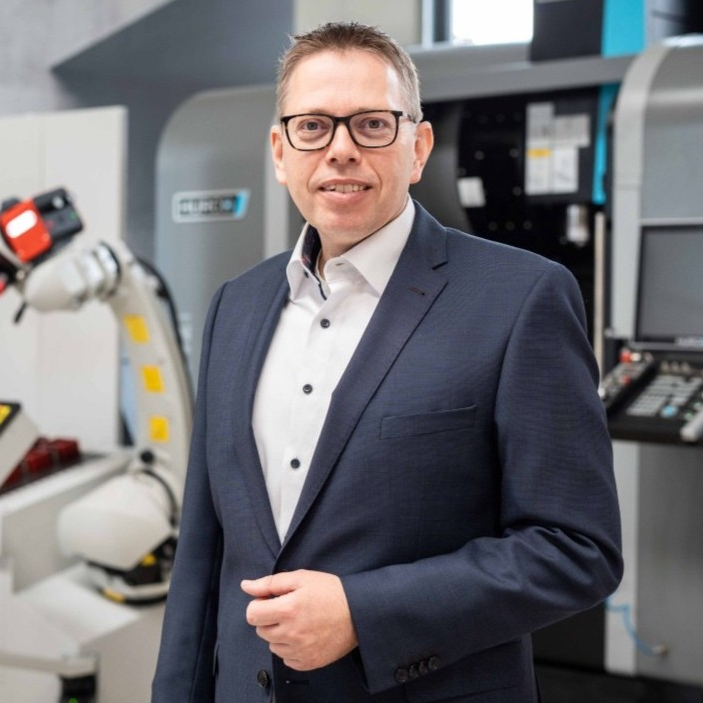
The expert – Jens Müller
Jens Müller is an ISO/IEC 17024-certified specialist on robotics and machine safety with over 30 years of automation technology and mechanical engineering experience. A global specialist and consultant, he assists large companies, including those operating in the automotive industry, and is a member of international ISO standardisation committees that develop new robotics standards.
In 2022, he founded Müller und Partner Sachverständige, which currently helps hundreds of companies with CE, robotics, product safety and compliance issues. He advises manufacturers, operators and integrators. Müller light-heartedly describes himself as “a kind of missionary” when it comes to making companies aware of their responsibilities when modifying machines.
Substantial modification of a machine according to the Machinery Directive
When is a machine deemed to have been modified to such an extent that it needs to be reassessed?
This issue is covered in Article 18 of the Machinery Regulation. A substantial modification exists when a machine has been subsequently modified by physical or digital means in a way not foreseen by the manufacturer and this has resulted in new safety risks or increased existing safety risks.
In practice, this means any technical modification that affects a machine’s safety can be a potential substantial modification, including measures such as retrofits. If an old type of motor is no longer available and is replaced with a modern alternative that is more powerful, for example, the entire risk assessment changes. Every modification project must therefore be assessed before it is actually implemented.
What are the key criteria indicating a substantial modification?
The planned change is first examined to determine whether it represents a substantial modification. Does it create a new risk or increase an existing one? If so, and this risk cannot be eliminated using simple technical measures, such as a cover, the change normally constitutes a substantial modification.
Another important aspect is not to view a modification project as a single modification. Each individual envisaged change must be assessed separately. That’s the only way to prevent a seemingly small modification project unintentionally resulting in the need to reassess a machine.
Are there any decision-making aids or clear thresholds to help determine when a system needs to be reassessed?
As yet, there are no official decision-making aids or guidelines for the Machinery Regulation. Until this Regulation enters into force, I therefore recommend continuing to use the tried-and-tested aids for the Machinery Directive. In Germany, for instance, the “Interpretation paper on substantial modification to machinery” published by the German Federal Ministry of Labour and Social Affairs (BMAS) helps with the assessment.
Another helpful aid in Germany is the 7-step plan of the German Social Accident Insurance Institution for the raw materials and chemical industry (BG RCI), which can be used to check a planned modification project in advance to see whether it constitutes a substantial modification. The EU guide to application of the Machinery Directive is also still useful, simply because there are currently no alternatives that are more specific relating to the Machinery Regulation as yet. These documents provide a clear basis for companies to argue their case and are a huge help when it comes to justifying decisions effectively.
Modifying machines and reassessment – what you need to consider
Does a reassessment always cover the entire machine or just the components that have been modified?
When an assessment concludes that the modification project constitutes a substantial modification, the entire machine must be reassessed. The machine is a complete system with interdependent safety functions. Once one safety-relevant part has been modified, the entire system must therefore be reviewed based on the current state of the art.
In the case of older machines, this quickly becomes a complex undertaking. Safety requirements and technical standards are continuously evolving. This often means, for example, that control cabinets need to be modernised, protective measures need to be redesigned or electrical safety is no longer adequate. Companies often end up suddenly finding that a supposedly small modification project costs more than a new machine would.
I therefore recommend always assessing planned modifications in advance and never waiting until afterwards. That’s the only way to avoid a situation in which a small change may necessitate a complete reassessment.
What special requirements apply when software or control systems are modified?
The same arrangements apply in principle, because modifications by digital means are included in the Machinery Regulation. This relates to software programs, control systems, sensor technology and communication systems. Even a new control program or a minor change to a safety-relevant function can affect the risk assessment.
Who is responsible when a machine is modified or altered?
Responsibility unequivocally lies with the operator. Many people think the machine manufacturer is still responsible, but once the machine is taken into operation, it is the operator who must ensure only safe working materials, tools and supplies are used. This also includes assessing whether a modification project constitutes a substantial modification. In Germany, the BG RCI’s 7-step plan can be particularly helpful in this regard.
A verified system safety assessment must be carried out. In the case of a substantial modification, the operator bears full responsibility and must carry out the conformity process, including the risk assessment and CE marking procedure.
In the case of a substantial modification, the CE procedure’s entire process chain must also be implemented – concept description, research on relevant technical standards, risk assessment, protective measures, validation and complete technical documentation, including declaration of conformity.
What organisational tasks arise once a machine has been adapted or modified?
Both substantial and minor modifications create organisational tasks. The hazard assessment should be performed at regular intervals. This can sometimes mean user instructions have to be adapted and staff retrained.
In the case of a substantial modification, the CE procedure’s entire process chain must also be implemented – concept description, research on relevant technical standards, risk assessment, protective measures, validation and complete technical documentation, including declaration of conformity. This involves a great deal of work and calls for specialist expertise.
What are the consequences of a reassessment when it comes to training briefings, user instructions and risk assessments?
A reassessment means all documents have to be adapted to the new technical status. If operating modes, risks or protective measures change, this must be transparent in all documents. To ensure legal certainty when operating a machine, the documentation must provide a correct depiction of the actual technical status.
What inspection/documentation obligations apply following smaller modification projects that do not constitute a substantial modification?
Even if a modification project does not constitute a substantial modification, the fact that no new risks have arisen and no existing risks have increased must be documented. The regular hazard assessment and inspection of safety-relevant components must still be carried out, too. A laser scanner or light barrier should be inspected every 12 months, for example.
Under what circumstances can a machine lose its conformity, even though no changes whatsoever have been made to it?
Many people think a machine that remains unchanged automatically maintains its conformity. This is not the case, though. A machine can still lose its conformity if technical standards change or the state of the art evolves. This happens, for instance, if calculation formulas for safety clearances are changed or safety-relevant components are found to no longer meet requirements during routine inspections. Recurring inspections are therefore essential. In Germany, the Ordinance on Industrial Safety and Health (BetrSichV), in conjunction with operational safety recommendation EmpfBS 1114, stipulates that companies/operators must check their machinery as part of the hazard assessment and, if necessary, adapt it to the state of the art (Section 3 of BetrSichV).
Does item provide a CE marking?
item provides a CE marking when it places a product on the market that is directly affected by a European directive. You will also get a CE marking from item if our design team develops a bespoke solution with the specific aim of minimising the risks of a defined application. In this context, you must describe and document the intended purpose and the associated hazards. This means the design can be adapted to the intended purpose both technically and in terms of safety technology.
Based on the details provided by the customer, item develops bespoke solutions such as special work bench solutions and guard constructions that can be regarded, for example, as safety components. When the design and the risk assessment are coordinated, item documents the entire CE process and provides the relevant documentation.
FAQs about the Machinery Regulation
What exactly is a substantial modification in the context of machines?
A modification to a machine is regarded as substantial when it creates a new risk or increases existing risks and these risks cannot be eliminated using simple technical measures. This applies to mechanical components and also to software, control systems and AI.
How do you establish whether a modification project constitutes a substantial modification?
You can use various guidelines and decision-making aids to establish whether a modification project constitutes a substantial modification. One example in Germany that offers tried-and-tested support is the 7-step plan of the German Social Accident Insurance Institution for the raw materials and chemical industry (BG RCI). Although this and other guidelines relate to the Machinery Directive, they can be used until guidelines relating specifically to the Machinery Regulation are available.
Does the entire machine really need to be reassessed if only a minor part has been modified?
Yes. As soon as a modification is deemed to be substantial, the machine as a whole must be reassessed. Amongst other things, this includes a risk assessment, documentation and a declaration of conformity.
What responsibility does the operator have when it comes to modification projects?
The operator bears full responsibility for the safe provision of working materials, tools and supplies. This also includes assessing whether a modification project constitutes a substantial modification. What’s more, the operator must ensure that hazard assessments and inspections of safety-relevant components are performed on a regular basis.
When does item provide a CE marking?
item carries out the CE conformity procedure when the article being sold is directly affected by a directive or when item creates a bespoke solution that helps reduce risks. Examples include safety guard constructions and specific work bench solutions.
Would you like to keep up to date with developments relating to machine safety? Simply subscribe to the item blog by completing the box at the top right.