
The secret to success lies in a modular approach. Thanks to XITO and item, planning and using robotics couldn’t be simpler. This offers particular benefits for small and medium-sized enterprises.
“Around 63 percent of all SMEs are currently feeling the effects of the skills shortage. At the same time, however, surveys indicate that these same SMEs could automate operations accounting for an estimated 87 percent of production time. The resulting overall cost savings would be in the region of 30 percent,” reveals Dr. Dennis Stampfer, founder of XITO. This calls for solutions that are available fast, can be used intuitively and are economically attractive. That’s exactly where XITO comes in. Thanks to its platform – also called XITO – SMEs can set up robot-assisted applications themselves, without any programming knowledge whatsoever. When it comes to the associated robot peripherals, XITO relies on the quality and flexibility of our robotics solutions. The modular principle used by both XITO and item ensures perfect interplay between the software and constructions.
Integrating cobots into production
Get to know all the advantages of cobots and the steps for successful integration in the free white paper. Download now and get ready for automation with collaborative robots.
GO TO THE DOWNLOAD
What is XITO?
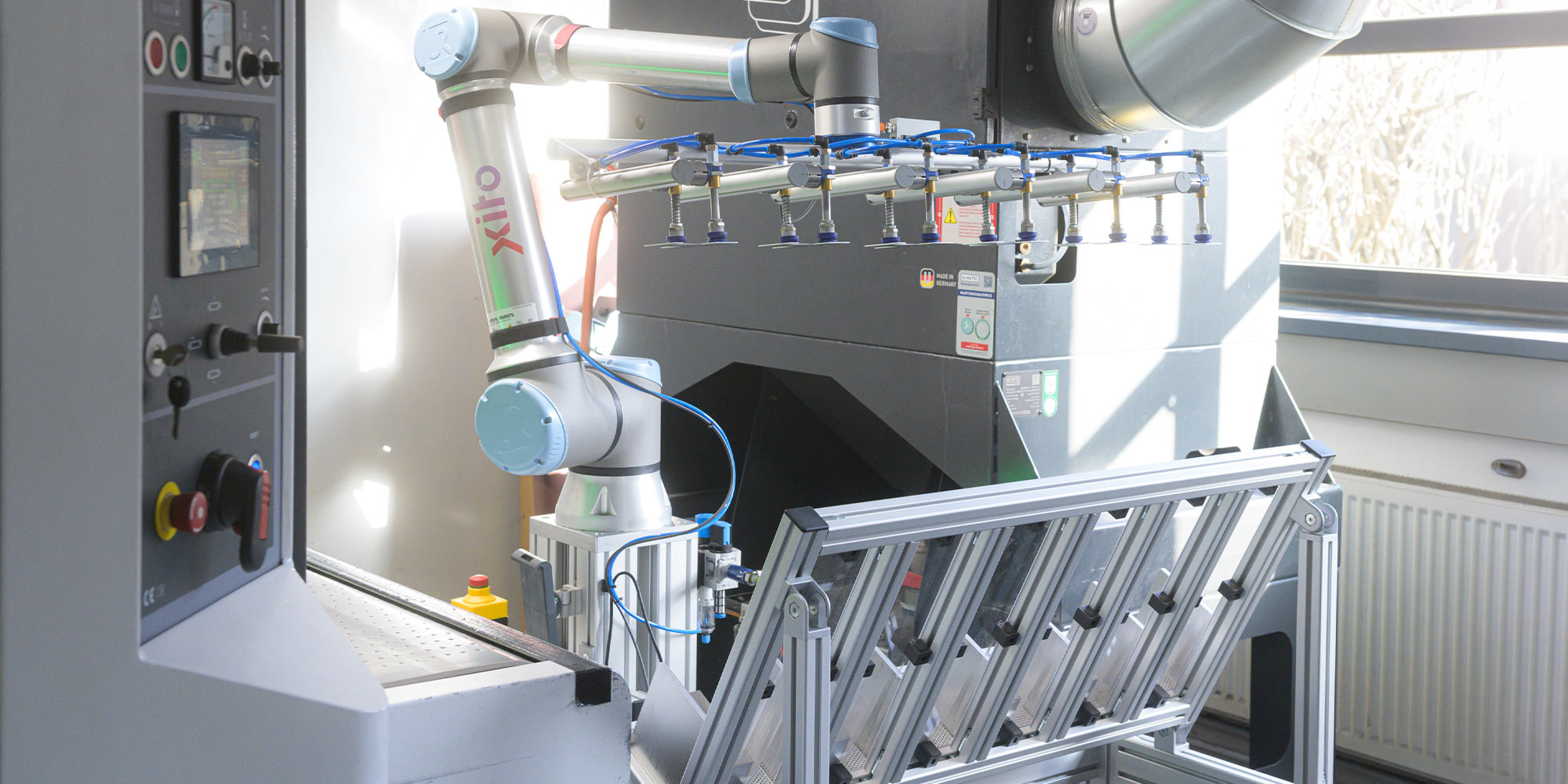
XITO is an automation platform that makes it exceptionally easy for SMEs to use a robot to automate a variety of operations such as palletising, machine loading and component handling – just a few of the most popular applications.
Making robotics-based automation more easily accessible for SMEs
One key realisation laid the foundations for XITO – robotics is too complex for many companies. The founder of XITO became aware of this issue in his previous job. As he explains: “The entire world is facing a whole host of problems, including labour shortages. What’s more, we must ask ourselves as a society who can and will want to take on the lion’s share of the work that needs to be done in the future. The fact is, our prosperity is based on automation to a very large extent. However, the specific challenges associated with automation can pose particular problems for small and medium-sized businesses.”
The majority of SMEs can’t leverage their automation potential because of the complexity involved. We want to change all that.
Stampfer, who has a PhD in computer science, believes the latest data on untapped automation potential should make people sit up and take notice. “Small and medium-sized enterprises are missing out on automation. The majority of SMEs can’t leverage their automation potential because of the complexity involved. We want to change all that,” he emphasises.
Stampfer got two colleagues with the necessary technical expertise on board and founded XITO. “We proved that robotics can be simple,” he reveals. Over the years, Stampfer and his team have succeeded in reducing the originally high level of complexity of robot-based automation to a level that anyone can handle. “During the past five years, we have discovered there are a great many SMEs who would love to give robotics a try and we are now paving the way for them all to do so, ” sums up the robotics expert and CEO of XITO.
How exactly does the XITO platform work?
The key element of the high-performance XITO automation platform is XITO Designer, which provides appropriate templates to help companies plan needs-based automation solutions on their own. Users can then purchase these solutions, including item components (XITO Marketplace), and commission them independently (XITO Builder) after taking delivery. What makes XITO so special is that none of these steps require any programming knowledge.
The term ‘no-code’ is self-explanatory – absolutely anyone can now program a robot, regardless of its make or performance data.
That’s because the automation platform is based on a no-code approach. Whereas each individual robotics manufacturer used to develop their own programming language for their robots, the current approach is to simplify things. The term “no-code” is self-explanatory – absolutely anyone can now program a robot, regardless of its make or performance data. SMEs using the XITO robotics platform can therefore kill two birds with one stone. “Anyone who has had to wait days or weeks for a robot service engineer and racked up growing downtime losses with every passing day appreciates both the simplicity of our CE-certified robot applications and our support service,” remarks Stampfer.
Examples of XITO in use
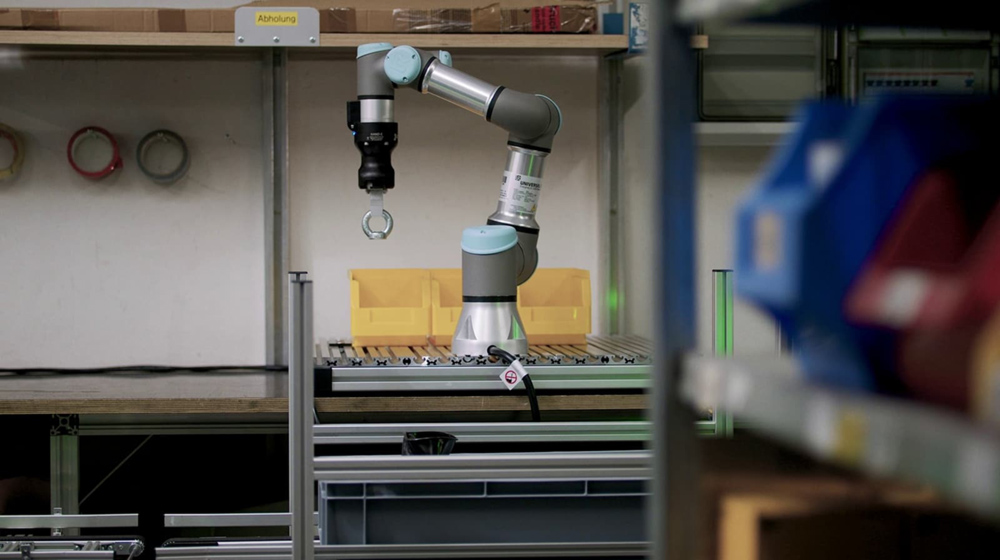
Numerous applications can be automated using a robot and the XITO platform. There is no one typical example. Users’ reasons for turning to automation are just as varied as the application templates that are available. Some companies are short of staff or looking to ease the physical strain on their workforce, while others want to run automated production operations overnight. Many customers are looking for simple ways to boost their efficiency.
The main priority is often to ease the pressure on staff. Whether this is because they are under too much physical strain or because well-trained personnel are more urgently required elsewhere is of secondary importance. Thanks to the XITO platform, working with robotics is now so simple that almost every SME has an application that can easily be automated.
Practically any robotics task that is typical for an SME and industrial production can be mapped:
- Packing, unpacking and repacking
- Palletising and depalletising
- Loading/charging all kinds of machines
- Handling materials
- Pick & place
- Bin picking
- Dispensing
- Assembly
- Quality control
- Material removal
Robot integration using modular item components
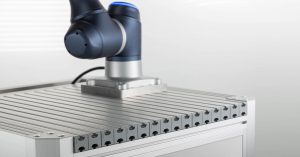
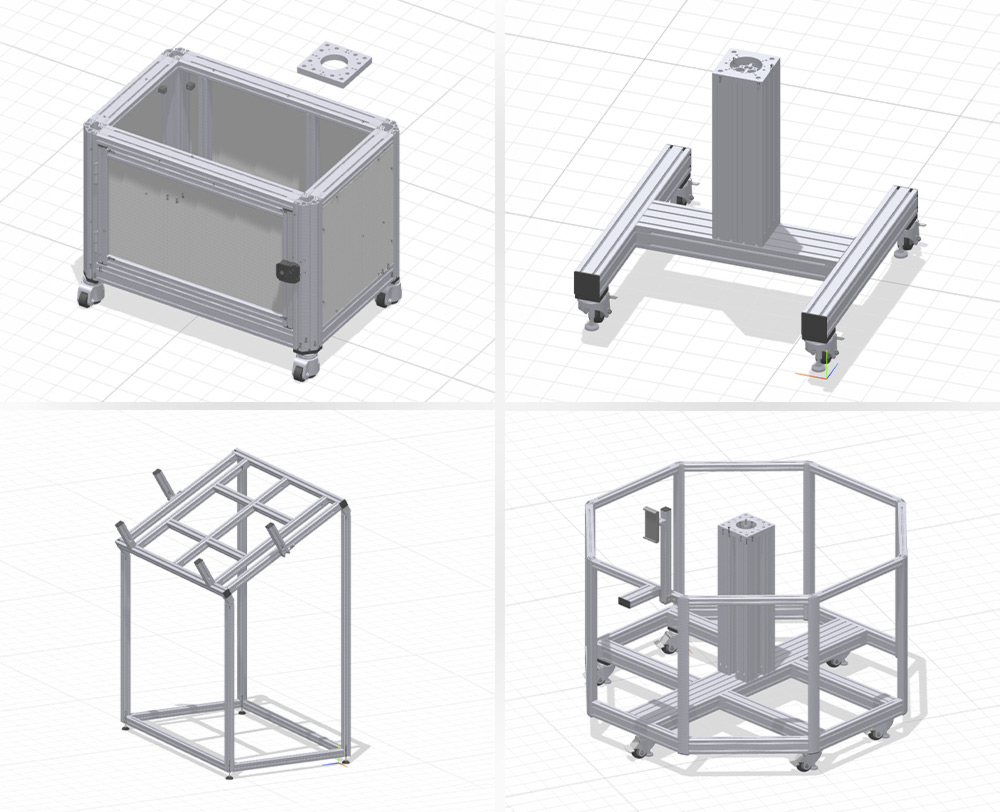
XITO uses the components in our item Building Kit System for robot bases and other peripheral units for cobots. Most solutions are based on our standard profiles – from the most compact profiles (Line 5) for components such as basic gripper frames through to Profile 8 (80×200) for e.g. robot columns and customised add-on tables. Roller conveyors and conveyor belts have also been used. All members of the XITO team have long been fans of item, since well before the XITO platform was created.
We trust the quality to such an extent that we now use item products as standard at XITO.
“All our engineers and technicians know item, having used the company’s solutions before. We trust the quality to such an extent that we now use item products as standard at XITO. We need quality we can rely on for our robot applications to ensure everything runs smoothly, and we know that’s what we’ll get with item components,” emphasises Stampfer. Besides the high quality, XITO is particularly impressed by the wide variety of item profiles, which cover practically every conceivable construction. Assembly is quick and easy, too. The team also appreciates the short delivery times and outstanding customer support it gets from item.
Modular concept – a shared principle for more efficient processes
XITO and item solutions are both based on the same fundamental idea – modularity – with a building kit principle that makes it extremely easy for new users to get started. The level of complexity is deliberately kept low. With our solutions, constructions don’t need to be welded together, and with the XITO platform, robot-based automation requires no programming knowledge whatsoever. In both cases, that helps users get up and running fast and eliminates cross-dependencies.
Why is XITO a particularly good option for SMEs?
“There are a whole host of issues that are particularly affecting small and medium-sized enterprises at present, but our XITO platform has the answer,” explains Stampfer. For instance, the workforce across SMEs is getting older and therefore less physically resilient. Sickness-related absences are on the rise, especially in production departments, and new staff are increasingly hard to find.
We’ve been seeing the current trend for some years now and have developed the XITO platform to help users help themselves.
“If an employee who mainly packs products or palletises boxes is off work, companies need a solution that is quick and, in particular, cost-efficient,” continues Stampfer. There’s no time for elaborate specification documents in such situations. It’s a similar story if robots are going to be taking over the night shifts, for which it is all but impossible to find staff these days. Robot-based automation offers a solution to these problems that is quick and, most importantly of all, easy. “We’ve been seeing this trend for some years now and have developed the XITO platform to help users help themselves,” concludes Stampfer.
Want all the latest updates on innovative robotics applications? Simply subscribe to the item blog by completing the box at the top right.